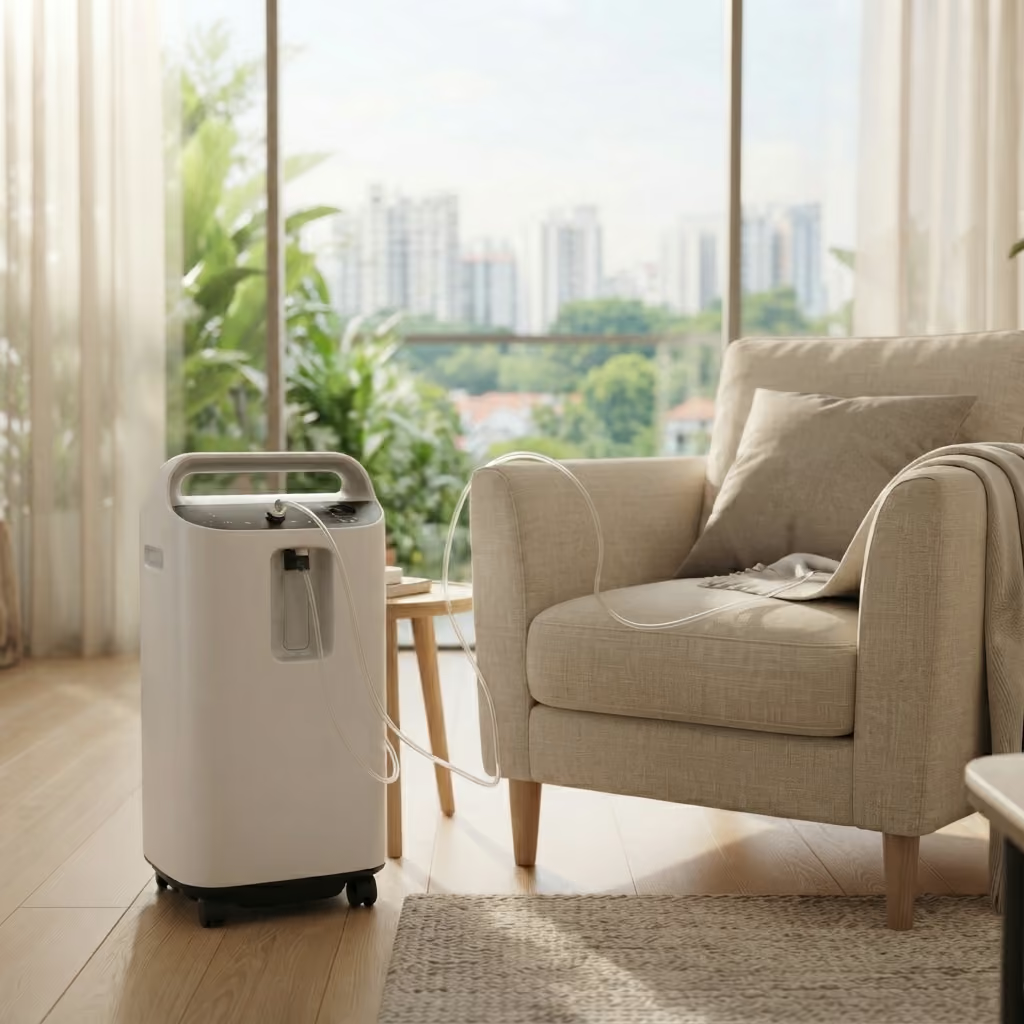
Whether you are starting new or have been on oxygen for years, get structured clinical oversight for your concentrator, flow stability, backup planning, and everyday essentials.
Home oxygen is not a plug-and-forget appliance. Delivery efficacy depends on 5 interdependent clinical, mechanical, and architectural parameters.
5-Point diagnostic matrix
Metric 01
Flow requirement (1–5+ LPM)
Validating prescribed Litres Per Minute against actual device output. We differentiate resting flow stability from exertional demands and shallow nocturnal hypoventilation titration.
Continuous vs. Pulse Dose Check
Metric 02
Hours of use
Distinguishing intermittent palliative relief (1–3h) from continuous therapy (16–24h/day). Long-cycleduty puts severe continuous thermal strain oncompressor piston seals and sieve zeolite.
Thermal dissipation validation
Critical acuity
Interruption sensivity
Evaluating the immediate clinical risk if power drops or an internal sieve bed saturates. For high- acuity patients, unbuffered desaturation occurs within 3–8 minutes of flow cessation.
Emergency cylinder need index
Metric 04
Care giver support
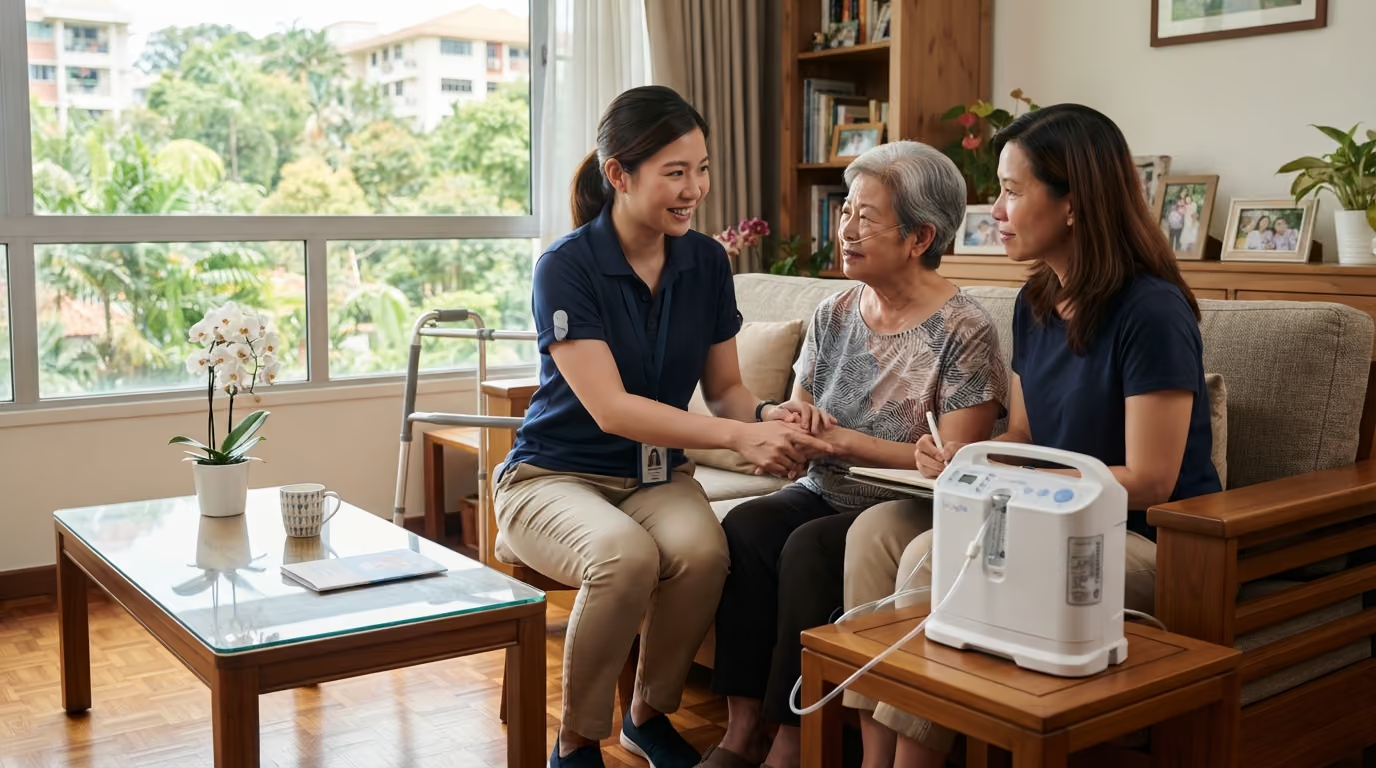
Empowering family members and domestichelpers: recognizing amber purity indicators,routine daily distilled water replenishment, andswitching cleanly to high-pressure cylinderregulators.
Guidance sheets
Metric 05
Home leyout and clearance
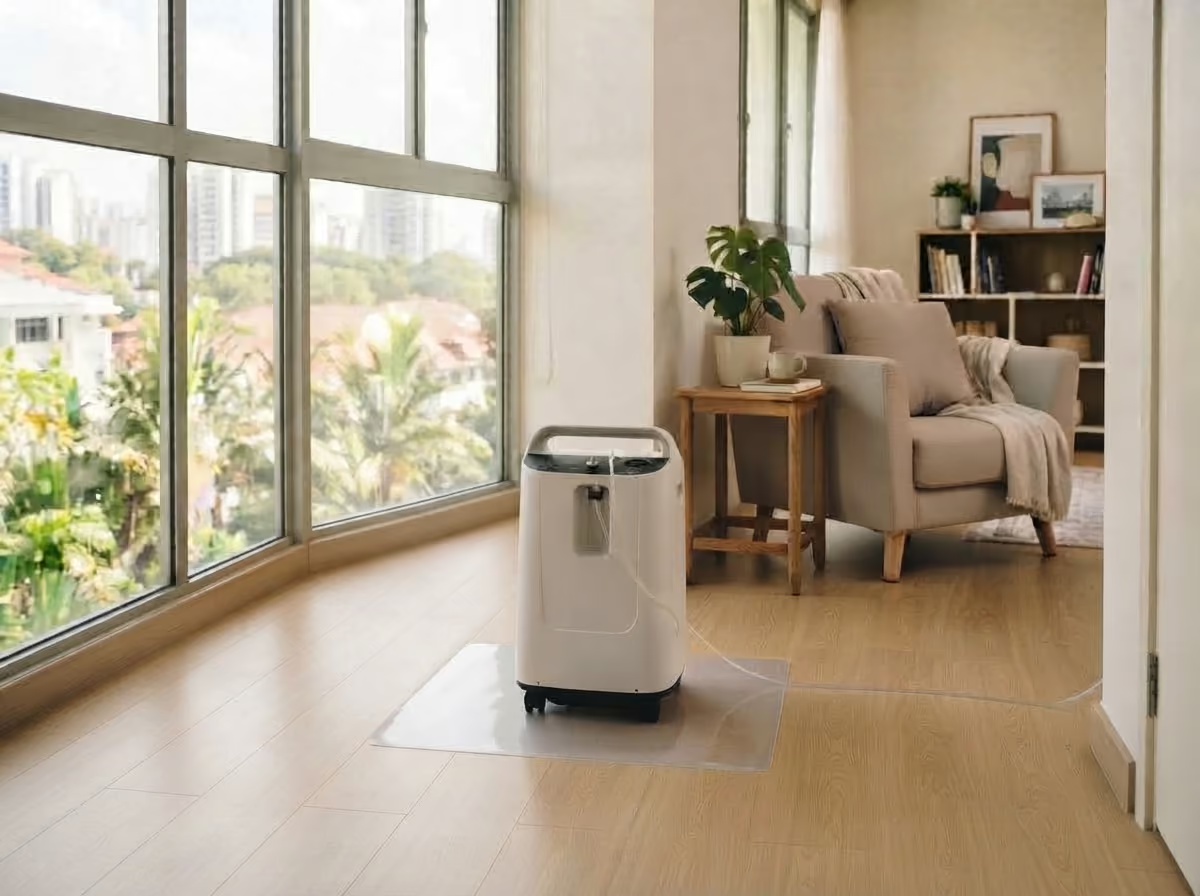
Machine ventilation cannot overheat. Calculating maximum tubing run radii (up to 15m anti- crush line) without backpressure drop, while guaranteeing fall-hazard free routes from bed to bathroom.
Home environmental
Starting or reviewing home oxygen: the 5-point protocol
Applied by our respiratory therapists during every initial deployment and routine audit in Singapore homes.
Personalized consultations
Empathetic caregiver and patient protocol reviews
01
Clinical test: >90% O₂
Device capacity and oxygen purity
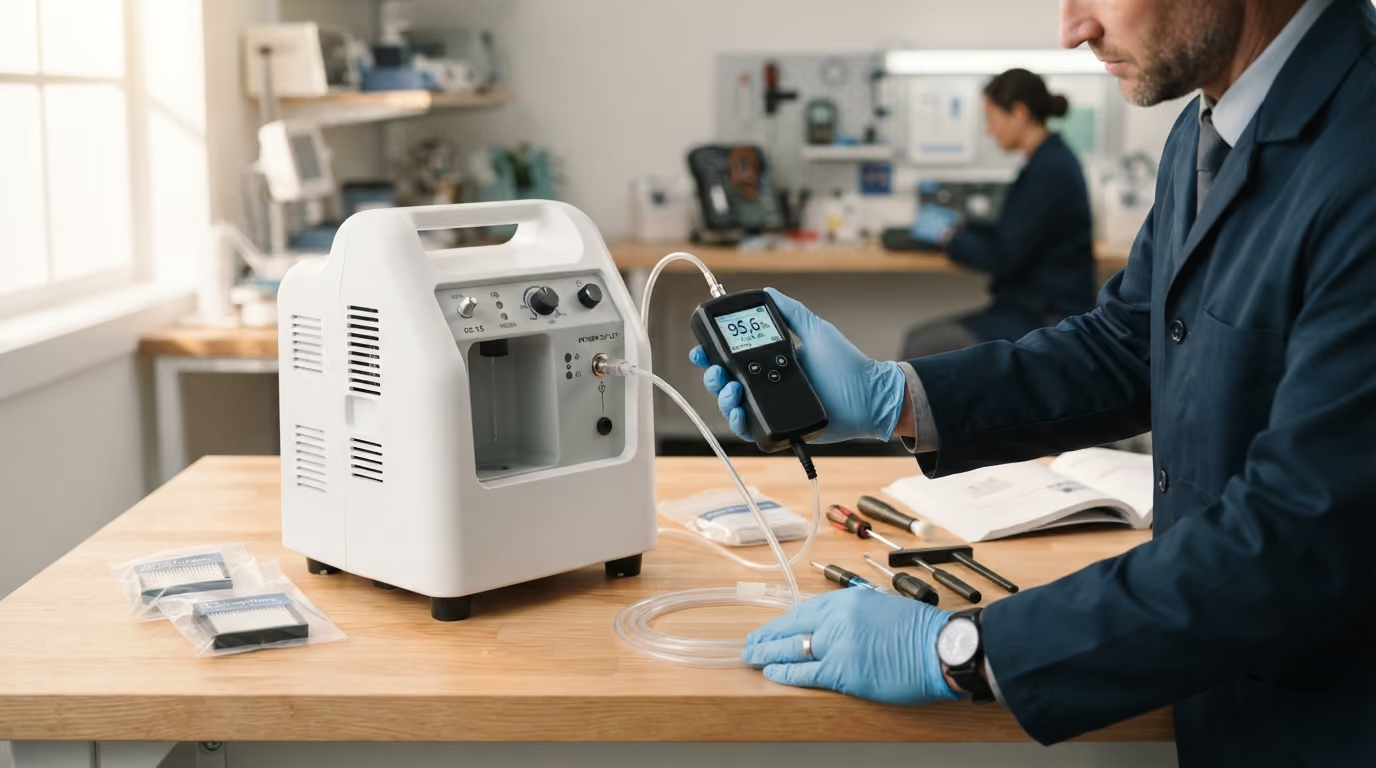
Verifying that output volume matches prescription without drop-off under load. Ultrasonic purity analyzer checks output across calibrated 1 to 5 LPM increments.
02
Safety buffer: 30cm
Placement, ventilation and electrical load
Ensuring 30cm unobstructed air intake clearance away from curtains, direct sun, or bed corners. Direct wall-plug connection to prevent extension cord voltage sags.
03
Lumen and softness
Accessories, consumables and humidification
Inspection of nasal prong flexibility to avoid septal ulceration, high-flow crush-resistant kink-free supply lines, inline water condensation traps, and sterile distilled water bubble jars.
04
Pre-Flight check
Daily operating routine and audible alarms
Testing the battery-backed power failure alarm, high-pressure relief valve, and visual flow meter balls. Logging starting hour meter readings to predict filter maintenance cycles.
05
Triage prepared
Caregiver readiness and emergency protocol
Physical demonstration of switching to backup medical oxygen cylinders, checking regulator psi pressure, and reaching the rfreshco 24-hour clinical escalation desk.
Continuity matters: planning for the unexpected
Medical concentrators are complex electromechanical machines that run continuously for months.The critical clinical difference is what happens when a machine alarms at 2:00 AM.
In home configuration
Electric concentrator + backup reserve cylinder
Never depand on a single point of failure
Most home providers drop off a single unit and instruct families to call an officehotline if anything goes wrong. In contrast, our clinical protocol integratesphysical cylinder reserves and rapid dispatch.
• Sudden nocturnal motor cutoff leaveszero oxygen
• 5–10 day workshop turnaround leavesuser stranded
• Building power trips force panicemergency room trips
• Pre-positioned bedside medicalcylinder for instant buffer
Oxygen delivery lines and filters harbor bacteria and accumulate ambient Singaporehumidity. Follow our structured consumable replacement schedule.
Every 2-4 weeks
Nasal cannulas and soft prongs
Pliable soft prongs harden with skin oils, riskingmucosal ulceration and bacterial colonization. Replace regularly to maintain comfort andhygiene.
Rule: Never wash cannulas in harsh detergents or bleach.
Every 2-3 months
Extension tubing and water traps
Inspect 7.5m / 15m anti-kink lines forcondensation accumulation and micro-cracking. Install inline water traps to capture tropicalhumidity condensation.
Rule: Replace tubing immediately if discolorationappears.
Daily refill / weekly descale
Bubble humidifier bottle
Empty and refill daily strictly with sterile distilledor cooled boiled water. Never use mineral water. Descale bottle diffuser ports weekly with mildvinegar.
Rule: Replace complete bottle assembly every 6 months.
Weekly wash / 6-mo hepa
Coarse foam and internal hepa
Wash external black sponge intake filters weeklyunder running tap and air dry completely.Internal sub-micron HEPA filters require 6-monthclinical exchange.
Rule: Running a machine with damp foam ruinscompressor valves.
When replacement may be appropriate
We are dedicated to maintaining your existing equipment whenever viable. However, clinical and mechanical realities make machine replacement the safest choice in specific scenarios.
Repeated fault alarms and heat warnings
Frequent O₂ purity drop warnings (amber/red indicator lights) or thermal cutoff shutdowns indicating severe internal cooling breakdown or valve leakage.
Ageing zeolite beds and exceeded hour ratings
When concentrators exceed 15,000–20,000 operational hours and the molecular sieve beds saturate, rebuilding internal columns may exceed the commercial value of a new whisper-quiet unit.
Legacy parts discontinuation
Legacy models whose manufacturers have ceased production of certified intake valves, mainboards, or manifold seals cannot be reliably maintained to clinical tolerances.
Changing prescription requirements
If your pulmonologist escalates your flow from 2 LPM to 5+ LPM, or requires night-time continuous delivery where a portable pulse-dose unit is currently deployed.
Our experience guarantee
Zero pressure, evidence-based assessment
rfreshco never promotes premature replacement. If yourexisting concentrator can be refreshed with a simplevalve service and filter overhaul, that is precisely whatour technicians will recommend.
"We measure purity with calibrated clinical sensors. Thetelemetry data guides the pathway—not a sales quota."
Servicing, loaner and turnaround
Oxygen therapy cannot pause for workshop maintenance. Our structured 4-stage protocol ensures continuous therapeutic delivery throughout the diagnostic lifecycle.
Calibrated diagnostic precision
Every machine serviced or deployed under loaner coverage undergoes ultrasonic O₂ purity analysis, particulate filtration renewal, and pressure transducer testing calibrated to Singapore MOH medical device safety standards.
95.6% prurity baseline, multi-point gas log
Remote tele-triage
Immediate triage over WhatsApp with a respiratory technician to log error beeps, run hours, and saturation readings.
Average response: < 30 mins
Loaner delivery and swap
A pre-sanitized hospital loaner unit matching your exact flow rate is delivered to your home before your machine is collected.
Zero therapy interruption
Lab diagnostic overhaul
Ultrasonic concentration testing across 1–5 LPM, compressor cup inspection, sieve bed regeneration, and HEPA filter exchange.
Service report
Home return and handover
Your refreshed machine is re-installed with new sterile cannulas, demonstrated to your caregiver, and the loaner unit retrieved.
Territory coverage Singapore-wide
rfreshco
Already have a concetrator?
We proudly service and provide continuity support. You do not need to replace your working device to a access our support
The latest insights from our Sleep Specialists - Fresh perspectives, practical advice, and expert insights to help you make informed decisions about your health.